Buenos Aires has some of the best free things to do of any city in South America, and honestly, some of the best of any city I’ve ever visited.
I spent over a week in Buenos Aires and was consistently surprised by how little I needed to spend to fill my days. If you’re travelling Argentina on a tight budget or you just simply want to experience the city the same way the locals do, this guide has you covered.
Below I have rounded up the 15 best free things to do in Buenos Aires, covering everything from free museums and weekend markets to street art, iconic monuments and hidden neighbourhoods. Every single one of these costs absolutely nothing to experience.
So with that said, leave your money at home and let’s take a look at some of the best free things to do in Buenos Aires.

How to get around buenos aires cheaply
The SUBE Card
The SUBE card is a reloadable travel card that works across virtually every form of public transport in Buenos Aires, on the metro (Subte), buses (colectivos) and trains. It’s the equivalent of an Oyster card in London or a Metro card in New York.
Buses in particular do not accept cash, you need the card. However, since January 2025 the Buenos Aires subway (Subte) accepts contactless credit and debit cards directly, including Wise and Revolut. Just tap and go. However, buses still require the SUBE card.
Where to get the SUBE card? It’s available from most kioscos throughout the city and at Subte stations. You can expect to pay approximately AR$1,500. You can find out more about the SUBE card on their website here.
Prices change frequently due to Argentina’s inflation so make sure to check the current cost at the ticket office or online at the official SUBE website.
The SUBTE (Buenos Aires Metro)
Buenos Aires has six metro lines (A, B, C, D, E and H) running across the city. It’s not the most extensive system in the world but it covers the main tourist areas well and is the fastest way to get between neighbourhoods.
Key lines for tourists and free activities:
| Line | Colour | Key Stops for Free Activities |
|---|---|---|
| Line A | Blue | Plaza de Mayo, Congreso |
| Line B | Red | Florida Street, cultural centres |
| Line C | Dark Blue | Connects Line A and D, San Martín |
| Line D | Green | Palermo, Botanical Garden, Barrio Chino (Juramento) |
| Line E | Purple | Bolívar, Independencia for San Telmo |
| Line H | Yellow | Córdoba, Hospitales |
The Colectivo (Buenos Aires Buses)
Buenos Aires has over 140 bus lines covering every corner of the city. Unlike the Subte, the bus network reaches neighbourhoods the metro doesn’t.
One important thing to note is that buses do not accept cash. Your SUBE card is essential.
The easiest way to navigate the bus system is through Google Maps, you just have to simply enter your destination, select the transit option and it will show you exactly which colectivo to take, where to board and where to get off.
Bus fares start at approximately 680–760 ARS per journey depending on distance, with a registered SUBE card. Fares increase regularly so always check the current rate at on the website before you travel.
Uber
Uber operates across Buenos Aires and is generally reliable. It’s more expensive than public transport but significantly safer and cheaper than hailing a street taxi which are notorious for overcharging tourists.
One thing to note: Uber is legal in Buenos Aires but the driver may ask you to sit in the front seat to avoid attention from taxi drivers. This is completely normal and safe.
The Écobici (free city bikes)
Buenos Aires has a public bike share scheme called Écobici and the first 30 minutes on weekdays is free (up to 4 trips per day), and 2 hours on weekends and holidays.
To use it you just need to download the BA Ecobici por Tembici app, and have your passport and a credit card to hand.
The best areas for the Ecobici are palermo parks, the Reserva Ecológica cycling paths and Puerto Madero waterfront.
Walking (The Best Free Option of All)
Despite its size, Buenos Aires is a very walkable city and many of the best free things to do in Buenos Aires are clustered in walkable areas:
Cluster 1 – San Telmo area: Sunday market + paseo de la Historieta + Plaza Dorrego + street art nearby
Cluster 2 – Recoleta area: Bellas Artes Museum + Museo Decorativo + Plaza Francia + Cultural Centre Recoleta
Cluster 3 – Palermo area: Botanical Garden + Rose Garden + Parque Tres de Febrero, all of which are within walking distance of each other.
Cluster 4 – Puerto Madero area: Reserva Ecologica + Floralis Generica + Punte de la Mujer are all within a 15 minute walk.
If you only have a couple of days, read my full guide to spending 2 days in Buenos Aires.

15 Free Things To Do In Buenos Aires
1. Visit the free museums
One of the best free things to do in Buenos Aires is to visit a museum. The city is home to over 150 museums and luckily there’s a good few that are absolutely free.
Museo Nacional de Bellas Artes: this is without question one of the finest free museums in South America. The collection spans Argentine and international art across more than 24 rooms.
📍 Av. del Libertador 1473, Recoleta
🚇 Subte Line H — Facultad de Derecho station
⏰ Tuesday to Friday 11am–8pm
Saturday and Sunday: 10am–8pm
Monday: Closed
💰 Voluntary contribution – effectively free entry, no booking required.
Museo de La Mujer: a cultural institution dedicated to exploring the history, struggles, achievements and contributions of women in Argentina and around the world. It is a smaller museum than some others on this list but a genuinely interesting one. It’s worth an hour of your time, particularly if you are visiting during a special exhibition. Check their social media before visiting to see what is currently showing.
📍 Pasaje Dr. R. Rivarola 147
⏰ Tuesday to Saturday: 3pm – 7pm
Sunday and Monday: Closed
💰 Free entry
Museo Histórico Nacional (National Historical Museum): This is one of the most important historical museums in Argentina. The collection covers the full sweep of Argentine history with artefacts, portraits and documents that provide essential context for understanding the country you’re travelling through.
If you’re visiting San Telmo for the Sunday market (which you absolutely should), the Museo Histórico Nacional is a perfect way to spend an hour or two beforehand.
📍 Defensa 1600, San Telmo
🚇 Subte Line C — Independencia station (15 min walk) alternatively take Line E to Bolívar station which is slightly closer to San Telmo
⏰ Wednesday to Sunday: 11am – 7pm
Monday and Tuesday: Closed
💰 Free entry
Museo Sitio de Memoria ESMA: The ESMA (Escuela Superior de Mecánica de la Armada) was one of the largest clandestine detention centres in Argentina during the military dictatorship of 1976–1983 otherwise known as the Dirty War in which an estimated 30,000 people were disappeared by the regime. Today the site operates as a memorial museum dedicated to preserving the memory of what happened here and ensuring it is never forgotten.
📍 Av. del Libertador 8151, Núñez
🚇 Subte Line D — Congreso de Tucumán station (short walk)
⏰ Tuesday to Friday:
Walk-in tours at 4:30pm
Saturday and Sunday:
Tours at 3pm and 4:30pm (To note: tour times change so always check the official ESMA website before visiting.)
💰 Free entry
Museo Escenográfico Botica del Ángel: One of the most unusual museums in Buenos Aires, and genuinely unlike anything I’ve seen anywhere else. The Botica del Ángel is a private museum created by Argentine artist Eduardo Bergara Leumann and it defies easy categorisation. Part visual art, part historical memorabilia collection, part performance space it’s chaotic, maximalist and absolutely fascinating.
📍 Av. Entre Ríos 900, San Cristóbal
⏰ Tuesday to Friday: 3pm – 6pm
Saturday and Sunday: Closed
💰 Free entry
Museo Casa Carlos Gardel: If you want to understand tango beyond the performances you’ll see on El Caminito and in the milongas, the Museo Casa Carlos Gardel is the place to go. This museum is dedicated to the life and career of Carlos Gardel who was the most legendary tango singer in history.
📍 Jean Jaurès 735, Abasto
🚇 Subte Line B — Carlos Gardel station
⏰ Monday, Wednesday, Thursday,
Friday: 11am – 7pm
Saturday and Sunday: 11am – 8pm
Tuesday: Closed
💰 Free entry

2. Visit One Of The Many Cultural Centres
Buenos Aires has cultural centres all over the city, making them a great free activity to do for a day. Some of the best cultural centres in Buenos Aires are:
The Centro Cultural Recoleta: The Centro Cultural Recoleta sits in a converted 18th century Franciscan convent beside the famous Recoleta Cemetery. It hosts rotating contemporary art exhibitions, theatre performances and cultural events throughout the year, most of which are completely free.
📍 Junín 1930, Recoleta
🚇 Subte Line H – Las Heras station
⏰ Tuesday to Friday 1:30pm to 10pm
Saturday Sunday and public holidays 11:15am to 10pm.
Monday: Closed
💰 Many exhibitions free however some events and exhibitions may charge an entry fee, check the website before visiting
Centro Cultural Kirchner: this is one of the largest cultural centres in Latin America and the building alone is worth the visit. The free classical concerts and tango performances held here regularly are some of the best free cultural experiences in the city.
📍 Sarmiento 151, Microcentro
🚇 Subte Line B – Florida station
⏰ Wednesday to Sunday: 12pm – 9pm
💰 Free entry – check website for performance schedule
Usina del Arte: is one of the most visually striking cultural venues in Buenos Aires. Housed in a beautifully restored early 20th century electricity plant in the La Boca neighbourhood, the building itself is as impressive as anything happening inside it. The venue hosts a packed calendar of free events throughout the year like classical music concerts, tango festivals, contemporary dance performances and art exhibitions. It’s definitely worth a visit.
📍 Av. Pedro de Mendoza 501, La Boca
🚇 Bus routes 29, 64, 152 (no direct Subte, take a bus or Uber from San Telmo)
⏰ Tuesday to Sunday: 2pm – 9pm
Monday: Closed
💰 Free entry – check website for event schedule

3. Take A Free Walking Tour
One of the best ways to get to grips with a new city is to go on a walking tour with a local guide. They can show you how to get around the neighbourhoods and provide valuable knowledge of the history and culture in the city.
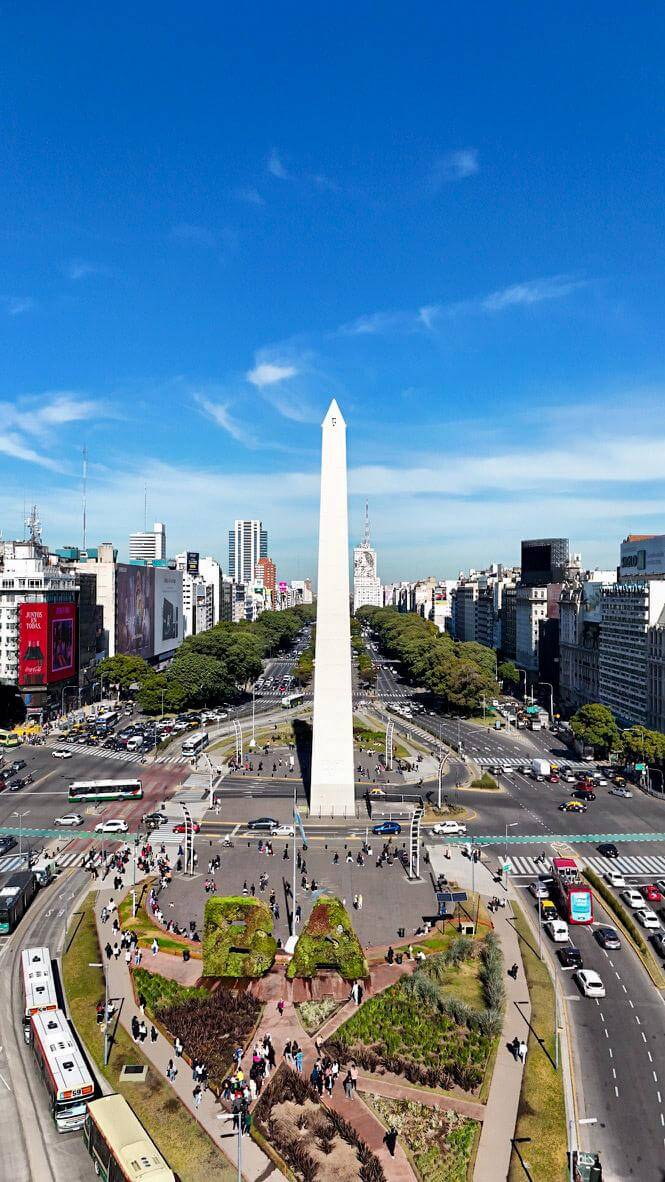
You’ll see some of the most important landmarks in the city like the prominent Obelisco, the famous Plaza de Mayo and the pink Presidential Palace. But more importantly, learn about their history from the perspective of a local.

4. Explore The Markets + Fairs
One thing Buenos Aires knows how to do is their markets. There’s an abundance of them in every neighbourhood. It’s just about knowing where they are and when they’re on. Have a wander around a few:
- Feria de Artistas Plásticos de Caminito – is an arts and crafts market on Caminito street open every day from 11am to 6pm.
- Plaza Dorrego Antiques Market – takes place every Sunday and is one of the most popular in the city for antique goods.
- San Telmo Sunday Market – one of the biggest markets in Buenos Aires selling antiques, handmade goods and local food. It’s open 10AM – 4PM and is located on Defensa Street.
- Feria de Mataderos – takes place every Sunday and is a great way to discover the country’s history and traditions. With folk dance performances and horse riding competitions, you can expect a lively atmosphere. There’s also a variety of arts and crafts, and traditional Argentinian food specifically from the North of Argentina to explore.
- Feria de Libros – is one of the largest and most important book fairs in the Spanish-speaking world. And takes place at La Rural exhibition center in the Palermo neighborhood of Buenos Aires. It runs over a few weeks in April.
- Feria de Artesanos Plaza de Francia – is a popular art market in the Plaza Francia held every weekend.

5. Bird Watch at Reserva Ecológica Costanera Sur
This is the biggest urban park in the city and is home to a wide range of animals. You’ll see many different types of birds, lizards and coypus.
You can even spot a couple of turtles wandering about. For a respite from the bustle of the city, it’s a great place to sit and relax. It’s also one of the most popular places for birdwatching, with over 350 types of species.
6. Admire Floralis Generica
The Floralis Generica is one of the most impressive monuments in the city. You can find this in the centre of Plaza de la Naciones Unidas.
It’s a giant stainless steel flower designed by Eduardo Catalano that represents hope, rebirth and renewal. The petals of the flower actually open and close with the sunlight.
The best time to visit this is at sunset when the light reflects off the stainless steel and aluminum, making the flower appear to glow.

7. Wander Along Paseo de la Historieta
This is one of the most unique free things to do in Buenos Aires. The Paseo de la Historieta is a walk beginning in the San Telmo neighbourhood, where you will find life-sized sculptures of Argentina’s most loved comic book characters.
One of the most famous is Mafalda located in Plaza Mafalda in San Telmo. You’ll probably see the crowd lining up to take photos with her.
You’ll pass through different streets along Chile, Defensa and Avenida Alicia Moreau de Justo until you reach Puerto Madero.
It’s a fun walk and a great way to learn more about Argentina’s comic interest. So keep an eye out for the iconic characters and make sure to get some photos with them.

8. Ride The Tram At Tranvía Histórico de Buenos Aires
As a city that used to boast one of the most extensive tram systems in the world, there isn’t much left of it. Except for the fleet of trams run by a nonprofit organization dedicated to preserving and showcasing Buenos Aires’ historic streetcars.
If you want to take a look at how the residents of Buenos Aires used to commute 100 years ago, head to the Caballito neighbourhood to take a ride on one of the vintage trams.
The tramway runs on a circular route around Caballito and all the cars have been restored to their original condition. The ride will take about 20 minutes.
To get a hit of nostalgia, it’s the perfect free thing to do in Buenos Aires.
You can find the trams along Emilio Mitre Street.

9. Visit The Many Plazas
Buenos Aires isn’t short on plazas, with over 100 scattered across the city. The plazas are some of the most beautiful I’ve ever seen and act as a focal point for tourists and locals alike to socialise, admire and learn from. Some of the most popular plazas in the city to visit are:
- Plaza de Mayo – is historically and politically significant in Argentina as it’s the site of some of the most important events in Argentine history. The Plaza itself is stunning and you’ll often find buskers singing or people dancing throughout the day.
- Plaza San Martin – one of the most beautiful in the city. It was made to honour the contributions that the national hero, San Martín made to the country.
- Plaza Dorrego – one of the oldest plazas in Buenos Aires. The square itself has a very European feel with colonial buildings and cosy cafes surrounding it.
- Plaza Francia is the beautiful public square in Recoleta named in honour of France. There are often performances, fairs and cultural events that take place so you can expect a lively atmosphere.
- Plaza Italia – A busy intersection and meeting point in Palermo. The plaza is surrounded by important landmarks like the the Ecopark, the Botanical Gardens, and the entrance to the Rosedal (Rose Garden).

10. Visit One Of The Most Beautiful Bookshops In The World
Considered one of the most beautiful bookshops across the globe, El Ateneo Grand Splendid is without a doubt impressive. It was once an opera theatre which is evident from the grandeur of the building.
Naturally, most of the books are in Spanish with very few English options, but the beauty of the bookstore itself is the real reason to visit. Head upstairs to get the most incredible view of the bookstore.
11. Explore China in Argentina
Barrio Chino is a little bit further out of the city but you can get there by taking Line D from stations like 9 de Julio or Pueyrredón to Juramento.
From Juramento, it’s a 10-15 minute walk to Barrio Chino.
It’s something different in the city and a fun place to explore with a great atmosphere and an abundance of authentic Asian cuisine.

12. Visit The Grand Monuments
Buenos Aires seems to have iconic monuments on every street. Take a walk around the city and hit up some of the most famous:
- Obelisco de Buenos Aires
- Teatro Colon
- Monumental Tower
- Puente de la Mujer
- Monumento a los Caídos en Malvinas (Falklands War Memorial)
- Casa Rosada
- Monumento a los Dos Congresos

13. Watch A Tango Performance On El Caminito
El Caminito is one of the most famous streets in Buenos Aires and is worth paying a visit to see the colorful buildings, murals and learn about the history of the neighbourhood.
There’s often performances going on along Caminito, with couples dancing tango, singing or performing tricks. It’s always a lively atmosphere and costs nothing to wander around.

14. Learn About The Street Art In Barracas
If you love urban art, then head to Barracas. The neighbourhood is renowned for its colourful murals and incredible art scene. The area has become a canvas for talented local and international street artists, transforming its walls into a colourful outdoor gallery.
You can spend some time wandering through the streets and even learn about the history of the city, many of the artists create pieces that explore social, political, and historical themes.
This is one of the best ways to see and understand the passion and creativity of the residents.

15. Relax In One Of The Many Gardens
Buenos Aires is one of the greenest cities in Latin America and is home to numerous public parks, botanical gardens, and nature reserves. And the best thing, there’s no fee to enter.
If you fancy stepping into nature away from the busy city life, head to one of the many green spaces available in the city:
- Jardín Botánico Carlos Thays (Botanical Garden)
- Rosedal de Palermo (Rose Garden)
- Parque Tres de Febrero (Bosques de Palermo)
- Plaza Francia
15 Best Free Things To Do In Buenos Aires: A Summary
So there you have it, if you’re travelling Buenos Aires on a budget you still have plenty of free things to do to keep you entertained in the city.
The museums alone are enough to keep you busy for a few days, combined with a walk around the city to see plazas, gardens and monuments, you shouldn’t need to spend a penny to fill up your days.
Buenos Aires has so much to offer and if you’re short on time, take a look at the best way to spend 2 days in the city or if you’re planning to head elsewhere in Argentina, consider checking out this Northern Argentina guide to give you ideas of where to visit.
Frequently Asked Questions
Is Plaza de Mayo free?
Entrance to Plaza de Mayo is free, however to visit the attractions such as Casa Rosa, you will need to pay a fee.
Are there free tours in buenos aires?
Yes, the city itself runs official free tours through the Buenos Aires Tourism Board, you can book through the official Buenos Aires tourism website. Most hostels also run regular walking tours, so you can book through them when you arrive.
is san telmo market free to visit?
Yes, the San Telmo Sunday Market is completely free to enter and browse. The market runs along Defensa Street every Sunday from 10am to 4pm and includes antiques, handmade crafts, street food and live tango performances. You’ll obviously spend money if you choose to buy food or crafts, but there is no entry fee.
What is the best neighbourhood to stay in Buenos Aires for free activities?
Palermo and San Telmo are the best bases for free activities in Buenos Aires. Palermo puts you within walking distance of the Botanical Garden, Rosedal, Parque Tres de Febrero and the EcoBici bike scheme. San Telmo gives you direct access to the Sunday market, Paseo de la Historieta and the National History Museum.