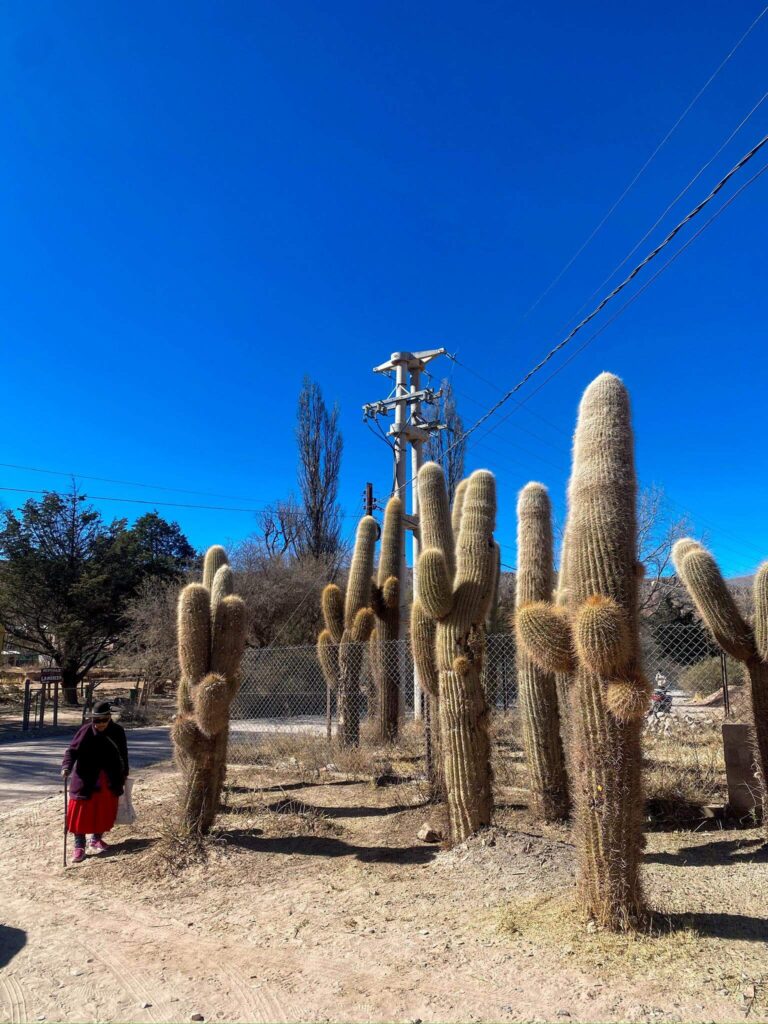
Purmamarca is the perfect place for a day trip. Located in the Northern region of Jujuy it’s quickly become one of the most popular towns in the area.
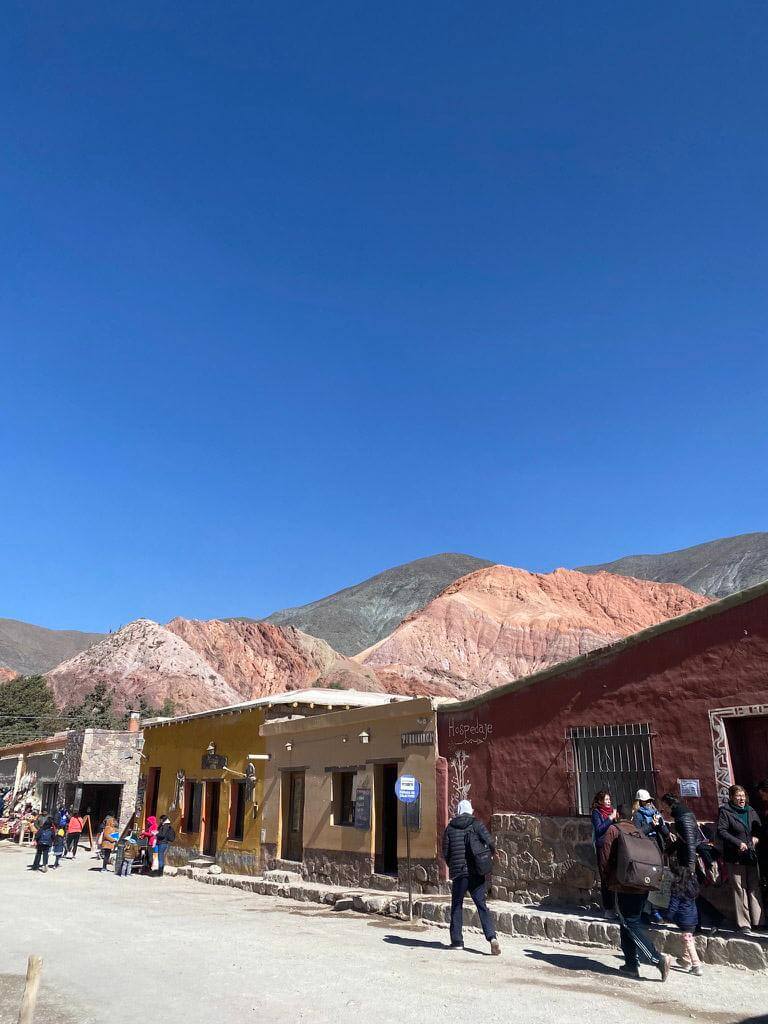
This probably has something to do with the dramatic backdrop of the seven-coloured hill that you can see from the cobblestoned streets of the town, it’s beautiful.
It really was unlike anywhere I’d been before and I loved wandering the streets of this little town, despite the weather (which was freezing). I took complete advantage of the crisp winter air, that was softened by the direct winter sun rays by sitting in the plaza buzzing with life and just watching.
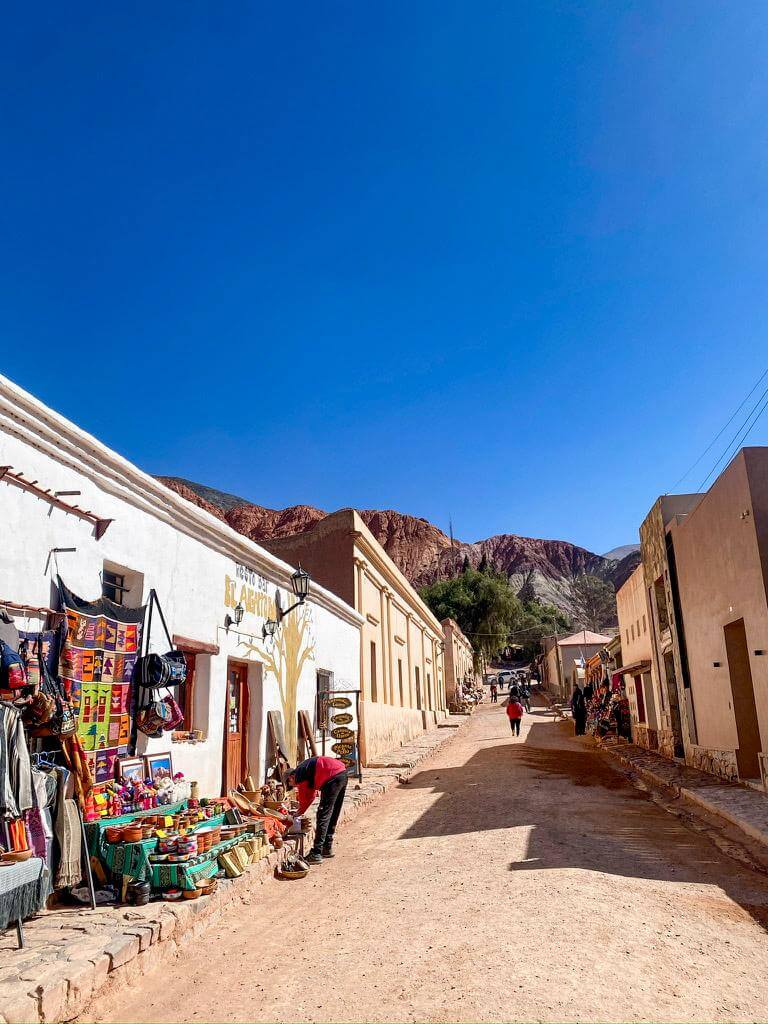
The photos don’t actually do this town justice. The contrast between the bright colours of the mountains and the clay-coloured houses is something you just have to see for yourself. As you wander around the town, the view of the hills just gets better and better.
I loved the slowness of it all, you’ll see people congregating in the plaza, sipping on mate or just browsing at the handmade crafts. It’s easy to lose hours here.
In this guide I cover everything you need to plan your visit to Purmamarca, the best things to do, how to get there from the surrounding towns, where to eat, how long to spend and whether it is worth visiting as a day trip or overnight stay. Whether you are based in Humahuaca, Tilcara or Salta, Purmamarca deserves a place on your northern Argentina itinerary.
To note – All prices in this guide were correct at the time of writing. Argentina’s inflation means costs change regularly. Use these figures as a directional guide and always check current prices on arrival. Dollar and pound equivalents will vary significantly depending on when you visit and the current exchange rate.”
Is it worth visiting Purmamarca for a day trip?
If you’re in the North of Argentina, you should definitely visit Purmamarca for a day trip. The town is conveniently located close to many of the other frequented towns in the area like Tilcara (25 mins), Humahuaca (1hr 10 mins), which makes it an easy place to get to on public transport.
There’s enough going on in the town to keep you busy with enough time to watch some live music at a peña, do a hike or try some local food in one of the many restaurants.
What is the best time of year to visit Purmamarca?
Spring (September to November) and autumn (March to May) are the best times to visit Purmamarca. The weather is mild, the light on the coloured hills is particularly beautiful and the town is less crowded than the summer peak season. Summer (December to February) brings higher temperatures and more tourists.
Winter (June to August) can be very cold, particularly at night, but the days are often sunny with blue skies, just be prepared to feel the chill. I visited in June and after coming from much hotter climates I definitely didn’t have the right clothes for the weather there.
How to get to Purmamarca
From Humahuaca to Purmamarca
You can take a bus from Humahuaca to Purmamarca. The buses run daily and are frequent. The journey takes about 1 hr 10 minutes and tickets cost around $4.40.
From Tilcara to purmamarca
The journey from Tilcara to Purmamarca is short and should only take around 25 minutes. The buses run frequently along this route and costs around $2.
From San Salvador de Jujuy to purmamarca
To get from San Salvador de Jujuy to Purmamarca you can take the bus which will take around 1.5 hours. The buses begin to run from 7am and tickets typically cost around $7.
From salta to purmamarca
The best way to get from Salta to Purmamarca is by bus, however the journey time is a little longer. You should expect it to take around 3 hours and cost around $15–20 depending on the service.
If you have a car then this would take around 2-2.5 hours.
You can book your bus tickets online here.
6 Best Things To Do In Purmamarca
1. Admire the view from Mirador del Cerro El Porito
Walk up to Mirador del Cerro El Porito for an incredible view of the hill of 7 colours from above. You can see the dramatic hill peaks and it’s the perfect backdrop for photos. There is a fee to reach the top, 250 pesos for Argentinians and 500 pesos for tourists.
The entrance to the Mirador sits on the eastern edge of the town, you just have to follow the main road out of Plaza 9 de Julio heading east and you’ll see the signposted entrance within a 5 to 10 minute walk from the plaza. It’s easy to find and well marked.
It’s an easy walk to get up and you shouldn’t run into any issues with it, however one thing to note is that the altitude in Purmamarca sits at around 2,200 metres above sea level. So if you have recently arrived from a lower altitude there is a slight chance you may feel slightly breathless on the uphill sections.

2. Visit a Peña
Visiting a peña is a must when you’re in Argentina. A peña is a traditional tavern where you can eat, drink and listen to local music. They’re a great place to meet locals and get new ideas for your Spotify playlist.
I have playlists dedicated to so many local bands from all over that I’ve visited and it’s such a fun way to not only develop your taste in music but to take you right back to the moment you first heard it. A great spot in Purmamarca is Tierra de Colores.
3. Try the famous Tortilla Rellena
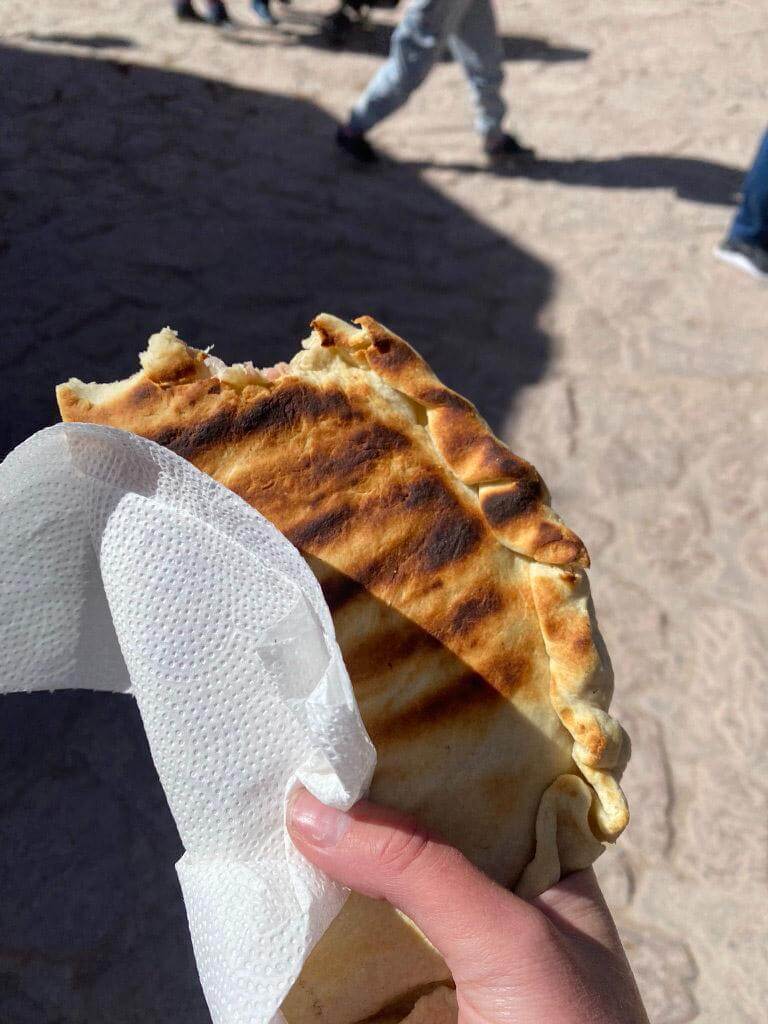
Tortilla Rellenas are a must-try when you’re in Purmamarca. You’ll see these being sold on the sides of the streets close to Plaza de Julio. You won’t miss it because there’s guaranteed to be a crowd gathered at any point of the day.
One tortilla costs 2000 pesos and you can choose from a variety of different fillings. I went for the classic ham and cheese and honestly, they’re just the best comfort snack on a winter day.
4. Browse the stalls in Plaza 9 de Julio
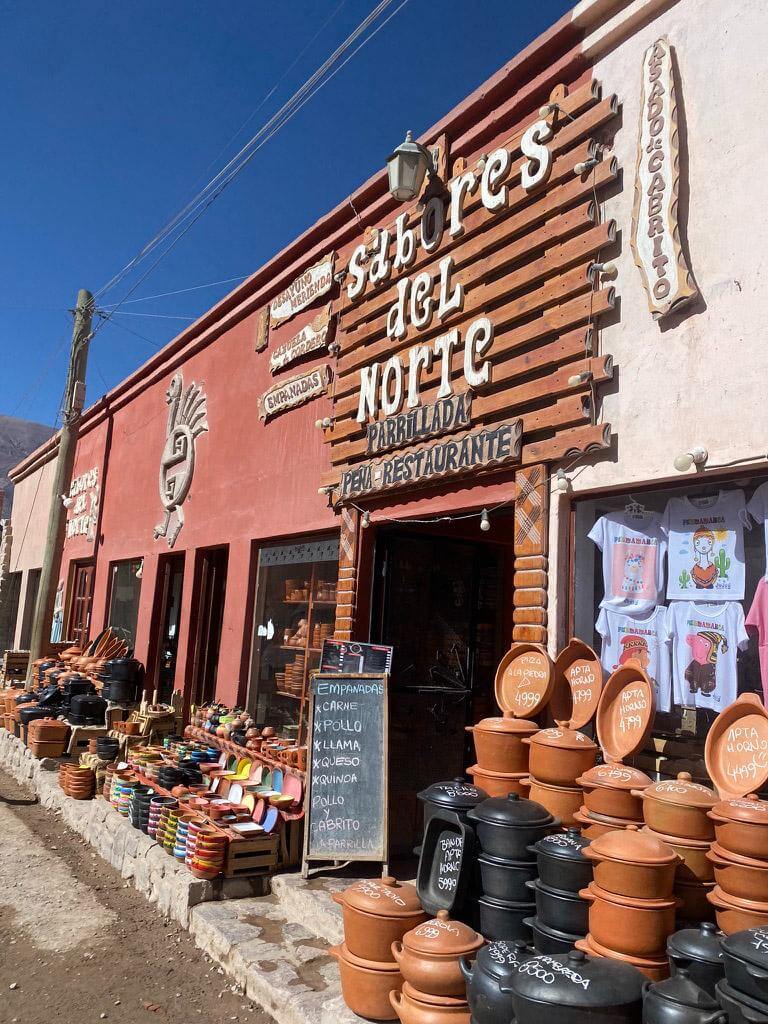
If you walk straight forward from the bus stop, you’ll see Plaza 9 de Julio. I spent over an hour just wandering around the plaza and side streets. Looking inside all of the shops reminding myself there’s not a cm of room left in my backpack for gifts.
The stalls are made up of an assortment of the cosiest llama wool jumpers, socks and pretty much any other garment you could think of. Take a break in the plaza and grab a bite to eat after strolling the town.
It’s blissful. I sat here for about an hour in the sun, eating my tortilla and people-watching as a man played a guitar next to me. It was one of the highlights of my day.
5. Hike Camino al Cerro de los Siete Colores
By far one of the most popular hikes to do in the North is to hike Camino al Cerro de los Siete colores. Plan for about an hour here. It’s a short, easy walk that covers around 1.3 kilometres. The trek takes you right up close to the stunning coloured hills.
You’ll get incredible views of the town and the surrounding mountains, especially if you go in the morning or late afternoon. At this time, the light hits the rocks just right. Wear comfy, sturdy shoes, as there can be a lot of loose gravel further up the path.
6. Say Hi To The Llamas
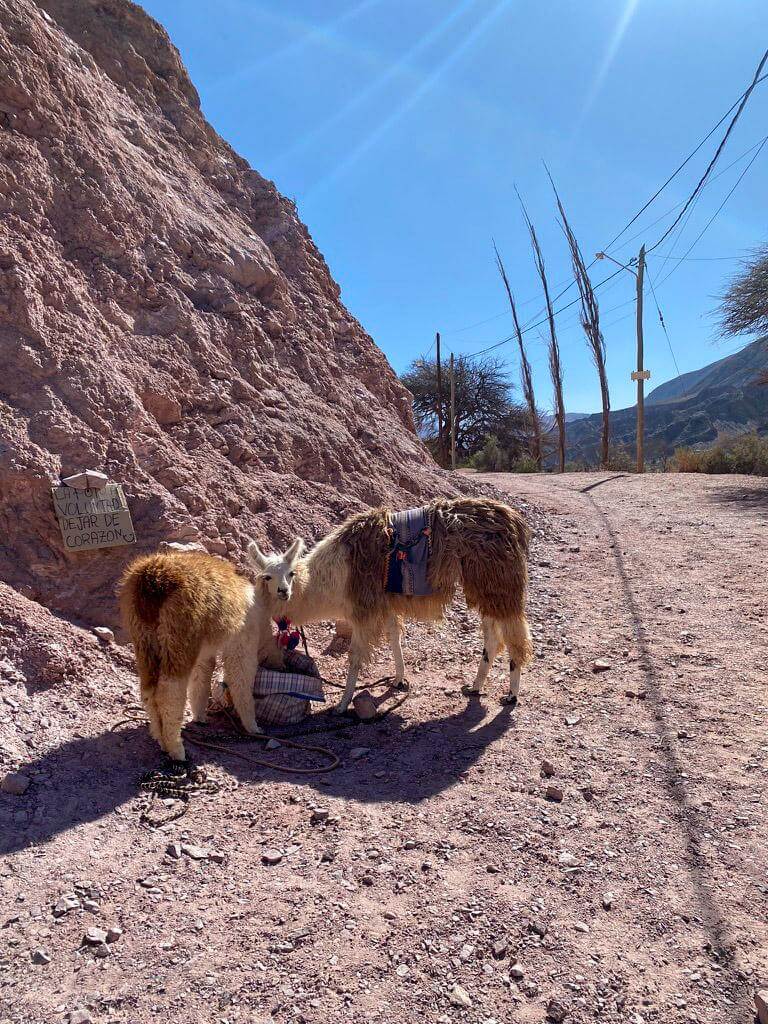
On your way up to the Mirador del Cerro El Porito you can expect to bump into some friendly faces. They usually have a couple of llamas at the bottom of the entrance grazing and watching people go by. Shockingly before I arrived in Peru I’d spent my whole life never seeing a real life llama, crazy I know.
Luckily you can expect to catch a few sightings of these beauties if you’re spending some time in Northern Argentina, llamas have been part of life in the Andes for thousands of years, originally domesticated by Indigenous communities for carrying goods across the mountains, providing wool, and helping people survive in the harsh high-altitude environment of northern Argentina.
Seeing them here is a small reminder that this region’s landscapes and traditions are still closely tied to Andean culture.

Where to eat in Purmamarca
You absolutely cannot leave Purmamarca without trying a tortilla rellena from one of the street vendors near Plaza 9 de Julio. You’ll probably see the crowd before you see the street vendor.
The restaurants surrounding Plaza 9 de Julio are your best bet for a sit-down meal in Purmamarca. Most serve traditional northern Argentine dishes like empanadas, locro stew and llama dishes. Prices are slightly higher than in Humahuaca or Tilcara but still very reasonable.

Practical tips for visiting purmamarca
What to wear
This will depend mainly on what time of the year you visit.
If you’re visiting during the winter months (June-August) make sure you pack warm clothes; hats, scarves, warm coats, because it really does get cold in this area and even more so at night, often dipping below freezing. I remember believing I’d never felt as cold in my life as I did during my time in Northern Argentina.
For the summer months, you have more freedom as you can expect temperatures of around 24°C to 25°C. Pack light layers, sun cream and sun protection, you’ll be very exposed to the sun whilst in Purmamarca. If you’re planning on hiking in the area consider bringing sturdy shoes rather than sandals as the trails involve a lot of loose gravel.
Spring and Autumn are the most comfortable seasons to visit. You’re best off wearing light layers that you can add and remove throughout the day.
Cash vs Card in Purmamarca
Cash is essential in Purmamarca. While some of the larger restaurants accept cards, the market stalls, street food vendors and smaller local spots are cash only. The tortilla rellena women at the plaza will definitely not have a card machine. There is limited ATM access in the town itself so withdraw cash before you arrive. You should be able to do this either in Tilcara, Humahuaca or San Salvador de Jujuy which have better banking facilities.
If you are using Western Union for cash in Argentina make sure you have picked up your cash before arriving in Purmamarca. There is a Western Union in Humahuaca if you need this, and they even had the 10,000 peso notes.
What is the altitude like in purmamarca?
Purmamarca sits at approximately 2,200 metres above sea level. Usually most people are fine with this without needing to acclimitise and if you’ve come from towns like Humahuaca (2,940m) or La Quiaca (3,442m) you should have got used to this.
I didn’t experience any issues in Purmamarca myself, and to be honest after coming from Bolivia it felt great to finally be able to breathe again. However, if you’ve come directly from Buenos Aires or another low-altitude city you may feel slightly breathless or fatigued for the first hour or two.
The best advice I’d received in Peru for dealing with acclimatisation was to drink plenty of water, don’t overdo it on uphill walks and try to keep alcohol to a minimum (hangovers are 10x worse too). It’s normally just a case of letting your body get used to it and taking it slow.
There’s also the option of Coca tea which most of the cafes and restaurants sell. This is a traditional Andean remedy for dealing with altitude discomfort and honestly it’s great. I was drinking bucket loads of it in Cusco and I really do believe it helped.
WiFi and Connectivity
I wouldn’t recommend on relying on WiFi in Purmamarca. The signal in small northern Argentine towns can be unreliable and many of the cafes and restaurants don’t offer it. I often lost signal if I wasn’t connected to WiFi and even when I was it was very tempremental.
Download offline Google Maps for the area before you arrive and make sure you have a local SIM card or eSIM with data.
Where to go from purmamarca
Argentina is home to some of the most beautiful places on the planet. If you’re in the Northern region of the country there are some great options for places to visit. You can book cheap buses here.
Some places worth visiting close to Purmamarca are:
- Humahuaca – the bus to Humahuaca takes 1 hr 15 and costs around $5.
- Tilcara – the bus to Tilcara takes 30 minutes and costs around $2.
- Salta – the bus to Salta takes 3 hr 55 and costs around $19.
- San Salvador de Jujuy – the bus takes 1 hr 10 and costs around $7.
Take a look at the best places to visit in the North of Argentina.
A day trip to Purmamarca: A Summary
It’s definitely worth a day trip to Purmamarca as it’s one of the most beautiful towns in Northern Argentina. I wouldn’t suggest travelling from Buenos Aires just to see Purmamarca unless you have more time to see the other towns and explore the region. It’s a long way to travel if you only have a few days.
But if you’re planning a trip to the Northern region, it’s definitely worth having on your itinerary. As it’s only small you can see so much in a few hours. It is one of the most expensive towns in the region but it’s famous for a reason. Purmamarca has a unique charm that you won’t find in other areas of the country.
Frequently Asked Questions
Is Purmamarca worth visiting?
Absolutely. Purmamarca is one of the most beautifull towns in all of Argentina. The Cerro de los Siete Colores backdrop is unlike anything else in the country and the town has a charm and pace of life that makes it easy to spend far longer than you planned. If you are visiting the north of Argentina it should absolutely be on your itinerary.
How long do you need in Purmamarca?
A half day gives you enough time to hike the Cerro de los Siete Colores, browse the plaza market stalls and try the famous tortilla rellena. A full day allows you to add the Mirador del Cerro El Porito, a sit-down lunch and an evening at a peña for live music.
How do you get to Purmamarca from Salta?
The most common way to get from Salta to Purmamarca is by bus via San Salvador de Jujuy. The total journey takes approximately 4 hours. You can also take a direct bus which runs less frequently. Check current schedules and book tickets through Plataforma 10 or at the bus terminal in Salta.
Is the Cerro de los Siete Colores hike difficult?
The Cerro de los Siete Colores hike isn’t difficult, it’s a short 1.3 kilometre walk taking approximately one hour return. There is loose gravel higher up so I’d recommend sturdy shoes rather than sandals. The altitude in Purmamarca sits at around 2,200 metres which you may feel, especially if you’re arriving from sea level.